CBAM and the Western Balkans, country by country.
More than 60% of Western Balkan goods exports go to the EU — making this one of the most CBAM-exposed regions in the world. The transitional period is over: since 1 January 2026 the carbon border adjustment mechanism has been running in its definitive regime, and the emissions behind steel, aluminium, cement, fertilisers and electricity crossing into the EU now carry a price. This tracker follows CBAM across the Western Balkans — exposure, exemptions and carbon pricing, country by country, checked against primary sources.
Three things changed on 1 January 2026.
The transitional period (1 October 2023 – 31 December 2025) was a reporting exercise. The definitive regime is not — and the pressure reaches Western Balkan producers through their EU customers, because Regulation (EU) 2023/956 defines exactly what those customers must declare.
Since 1 January 2026, EU companies may import CBAM goods above the de-minimis threshold only as authorised CBAM declarants. Buyers are formalising their supply chains — and their supplier data requirements — accordingly.
Certificate sales open on 1 February 2027 and cover 2026 imports retroactively. The Q1 2026 certificate price — EUR 75.36, published 7 April 2026 — gave buyers their first hard number to provision against.
Where an installation supplies no verified actual emissions data, the importer may fall back on Commission default values (IR (EU) 2025/2621) — with a 10% mark-up for 2026 imports, 20% for 2027 and 30% from 2028. Suppliers with clean, verified data become cheaper to buy from.
Country-by-country CBAM exposure.
| Country | Exposure profile | Carbon pricing status |
|---|---|---|
| Kosovo | Direct exposure is limited — CBAM-covered exports to the EU were about 1% of GDP (2021 data) — but power generation is almost entirely coal-based, and the practical exposure runs through metals and the wider EU supply chains Kosovo firms feed. | No national carbon price yet. |
| Serbia | The region's front-runner on carbon policy: since 1 January 2026 a national GHG emissions tax of EUR 4 per tonne applies to permitted industrial operators, alongside a border levy on carbon-intensive imports mirroring the EU CBAM product list (electricity excluded for now). | National tax in force since 2026; EU-ETS-equivalent pricing expected by 2030 under its Energy Community and accession track (reported, not an EU act). |
| Bosnia & Herzegovina | Among the most CBAM-affected countries in the region: electricity and aluminium are its largest CBAM-covered export categories to the EU, with coal at roughly 70% of the generation mix (2020). | No national carbon price yet. |
| North Macedonia | Iron and steel account for the largest share of CBAM-covered exports to the EU, produced with significant coal input — ranked with Bosnia & Herzegovina among the region's most affected. | No national carbon price yet. |
| Albania | The least exposed in the region: hydropower-dominated electricity and an export mix light on CBAM goods. | No national carbon price yet. |
Sources: Germanwatch, Impacts of the CBAM on the Western Balkans and Ukraine (2023, Eurostat-based); Bruegel working paper (September 2026); EU Delegation to Serbia. Last reviewed 31 October 2026.
The 50-tonne exemption, electricity and the Green Agenda.
First, the exemption question. Regulation (EU) 2025/2083 replaced the old EUR 150 per-consignment exemption with a de-minimis threshold of 50 tonnes net mass of CBAM goods per importer per calendar year, covering iron and steel, aluminium, fertilisers and cement. Two things matter for Western Balkan exporters. The threshold belongs to your EU customer, not to you — a small buyer may fall out of CBAM entirely while a large one stays fully in scope for the same product. And it does not apply to electricity or hydrogen at all.
Electricity is the region's hardest case precisely because no de-minimis relief exists for it, and it is one of Bosnia & Herzegovina's largest CBAM-covered export categories. Steel tells a similar story in North Macedonia, where iron and steel make up the largest share of CBAM-covered exports to the EU. Albania sits at the other end of the scale — hydropower-dominated electricity and an export mix light on CBAM goods make it the least exposed country in the region.
Policy is moving underneath all of this. The Green Agenda for the Western Balkans commits the region to aligning with EU climate policy, and carbon pricing is the sharp end of that alignment: Serbia already taxes industrial emissions at EUR 4 per tonne and is expected, under its Energy Community and EU-accession track, to introduce EU-ETS-equivalent carbon pricing by 2030 — a reported direction, not an EU act. None of it reduces a CBAM bill today: the Article 9 implementing act that would let a carbon price paid in the country of origin count against certificates was still a draft as of October 2026, and no EU decision recognises any scheme in the region.
CBAM compliance for Western Balkan exporters.
Habitat is a Kosovo-based ESG and carbon consultancy working with exporters across the region. The work starts where your EU customer's data request starts — the regulation defines exactly what they must declare, so it defines exactly what you need to produce.
Actual values only count if they are verified — otherwise your customer declares default values carrying a mark-up. Clean, verified emissions data is therefore not paperwork; it is your position on the supplier list.
Built in the region, for the region.
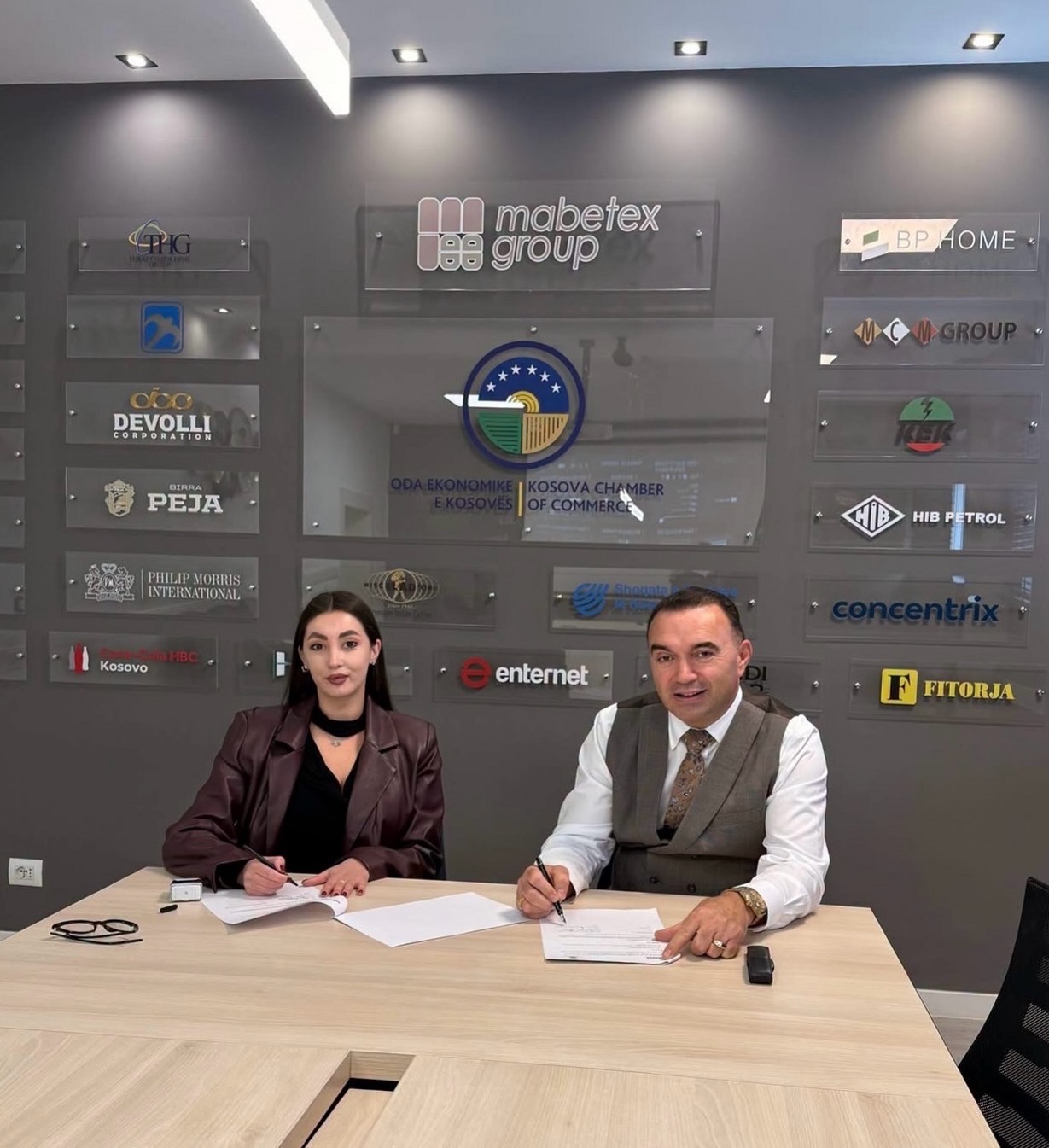
Habitat works on both sides of the CBAM equation: with the exporters who must produce installation-level data, and with the institutions building the region's green-transition capacity. In October 2026 we signed a memorandum of understanding with the Kosovo Chamber of Commerce to accelerate sustainable business practices, ESG integration and climate-technology adoption across Kosovo's business sector — read the announcement.
The measurement work runs on Karbon360°, our ClimateTech platform for measuring, managing and reporting greenhouse-gas emissions.
Karbon360°
Karbon360° transforms energy and business activity data into structured greenhouse-gas inventories and CBAM-ready emissions data — built for companies that need numbers an EU customer can declare.
Frequently asked.
Is there a CBAM exemption for Western Balkan exporters?
Do Western Balkan exporters pay CBAM directly?
Does CBAM apply to electricity exports from the Western Balkans?
Does Serbia's carbon tax reduce the CBAM bill of EU customers?
Is there carbon pricing in the Western Balkans in 2026?
What does CBAM compliance for Western Balkan exporters actually involve?
Know your exposure before your buyer does.
Tell us what you export and to whom. We will map your CBAM position — products, customers, data gaps — and put scope, timeline and price in writing.